Last week, I had the honor to give a presentation at Eurocontrol`s ATM Training Team (ATT). The ATT could be regarded as a network of training organisations and supervisory authorities in the sector of Air Traffic Management who meet to share information and to learn from each other and from external sources.
As from this December meeting onwards, a number of fixed agenda items have been put in place inside the bi-annual meetings. One of these is about innovation. Ingenav was invited to give the first presentation in this series. When asked to consider a presentation topic I thought that the right way to start is to try to set the basis right: There are many reasons a training organisation might want to innovate, and the first step in that direction should be to know why.
Each training organisation I know in our field has an organisational structure which includes a management tier, composed of elements whch include functional (training) management and administrative management (finance, resouces/people, IT, etc.). The what I call functional management is normally composed of the teaching staff and their management. In some training organisations, mainly the bigger ones, this area also includes support to training development and delivery, both in approach and also in content. In most of the organisations I know however, this support service is either non-existant and the tasks fall on the instructors, or there is a gap in knowledge, understanding and expectation between these professional training support staff and those tasked with teaching.
The problem mainly comes from this area, I think, in that our instructors, most of the time, are not as skilled and knowledgeable as they should be in learning theories and approaches. The reasons to this situation are in my opinion valid ones, in the sense that this personnel is recruited firstly for their subject matter expertise (ATC) it is a regulatory requirement, AND with a minimum knowledge and skill in terms of teaching. Some organisation recruit with a minimum requirement of an on-the-job trainining or synthetic training device endorsement, the training of which can be resumed to a couple of weeks of initial training mainly in practical instructional techniques and a bit of learning theory and human factors applied to training plus a minimum number of years of experience and periodic short refresher trainings that very rarely go further than refreshing the same techniques learnt in the initial course (and rarely building on them). Other organisations go a bit further and require candidates to have followed classroom instruction techniques or similar courses. Some organisations give internal improvement courses to their staff in the area of teaching and others don´t. However in all (or at least in most as never say all) cases, none of this compares even remotely, for example, to the training a professional teacher receives.
The result, amongst other things, is that this staff, who is the first line of contact with the students lacks the background knowledge, skill and especially confidence to innovate. We learn from experience (which in other words from mistakes we commit with previous students) and from copying models of our predecessors, who in turn were poorly trained themselves.
So, without goining into further analysis of the issues that this situation arises, in terms of the subject of the title of this blog entry, how can we innovate if our basis – our instructors, are shaky in their knowledge and confidence on how should they best approach their tasks, adapt to new situations and propose improvements?
Back to the ATT:
The idea that I presented in the ATT aims, at least in part to deal with this:
To provide our instructors with ideas and a framework on how they could see, organise and deliver, and think of improvements in training.
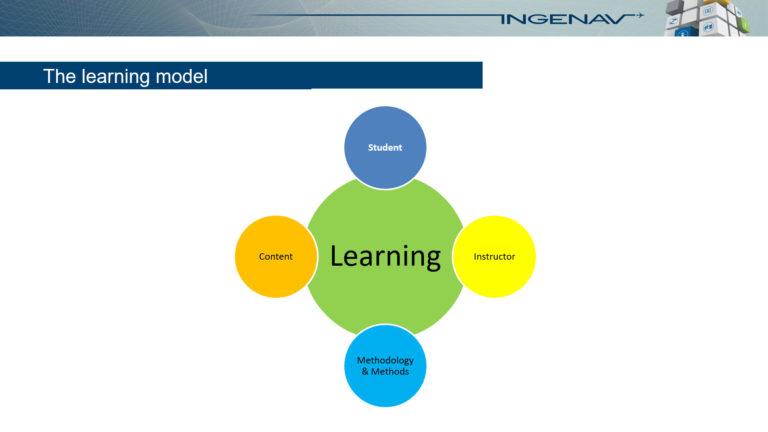
For the past 7 years we have been organising workshops (at Skyguide, Eurocontrol, FABEC and DFS) aimed at instructors to see learning as a series of events that occur to students who through the use of methods managed and delivered by our instructors assimilate knowledge and become skilfull in the competences required.
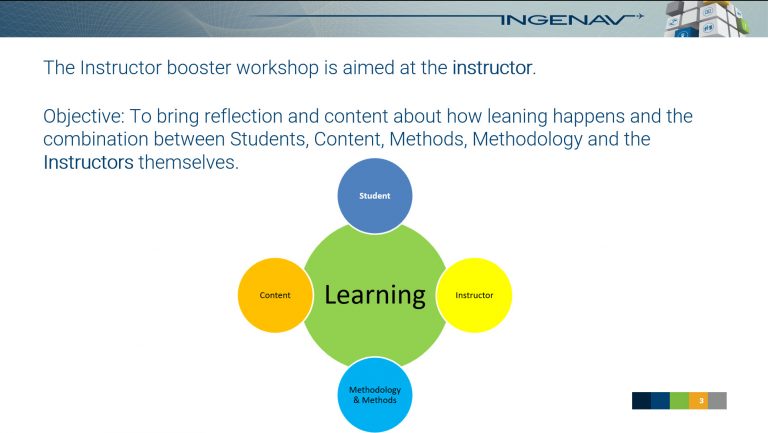
During these workshops which also aim at motivating our instructors and to give them further confidence in their didactical choices, we reflect on the profile of the students they teach. We discuss gender gaps and current preferences and relationship their students have with items such as critical thinking, the use of technology, attention span, etc. We then consider the content and the competence areas we need to facilitate learning in and study its nature: rather theoretical or practical? Concrete or rather abstact. Is the relvenace for the students clear? Is it condensed or delivered with time? Etc.
After this we do a good introduction to methodologies such as adult learning and the staged self directed learning model. We also look at gamification. We dig down into seeing what methods such as student centred learning or the flipped classroom have to offer. Then we look at some tools such as using videos on demand, authoring and editing tools which are accessible to non experts, and more.
Finally we look at what is expected from us as teaching professionals: being teachers, instructors, facilitators and also coaches. We do an analysis of these needs and discuss and action plan.
We come out revitalised, “boosted” in our profession as teachers/instructors, along with that of being subject matter experts. We have a basis to think of innovation from the roots, from those who are the mortar in ATC training.
If you wish to receive more information about these workshops, please do contact us!