
Key projects
INGENAV has managed and consulted on many projects for Air Navigation Service Providers, Airport Operators and ATM System Manufacturers. We also work on the development of innovative propriety tools for the improvement of safety and efficiency in air transport.
Some of our key projects are:

TADA – Terminal Airspace Digital Assistant
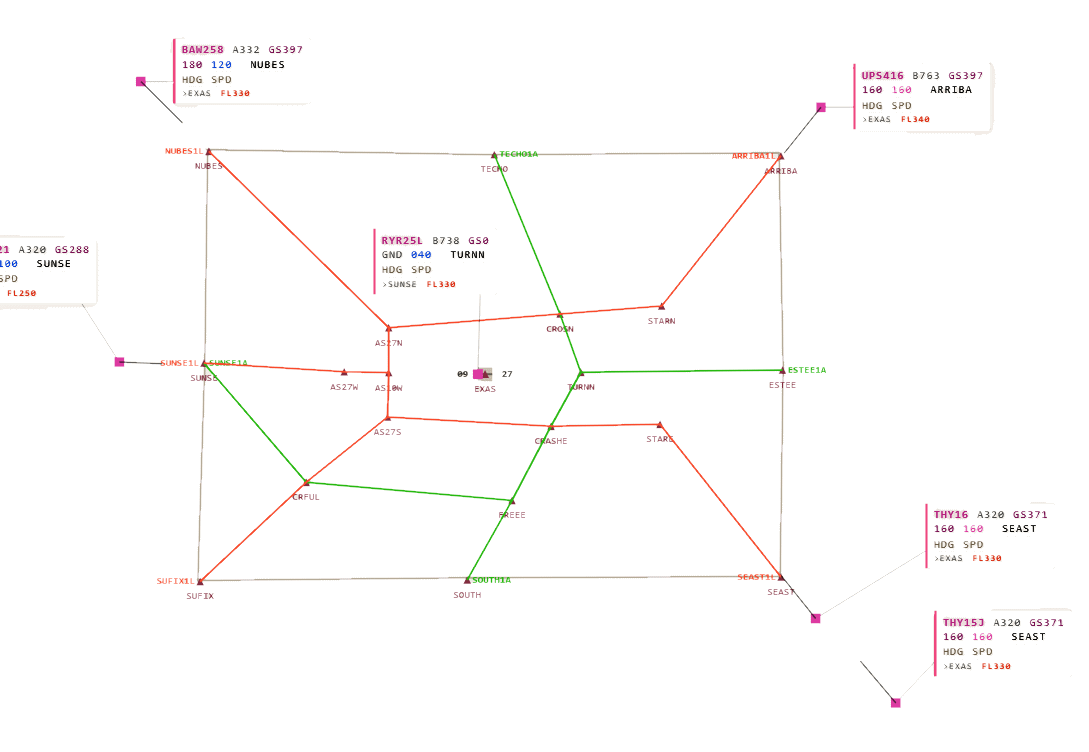
INGENAV is managing this SESAR 3 JU project, which is co-funded by the European Union’s Horizon Europe innovation programme. The project aims to improve terminal airspace performance through the use of historical air traffic management data and machine learning by providing the air traffic controller with decision and action selection for future situations, presented in a human-centric way.
TADA objectives are to:
- Develop an AI digital assistant tool
- Develop a novel Human Machine Interface (HMI)
- Validate TADA and the associated HMI concepts
- Gain further understanding into the best Human-AI teaming in ATC
You can find out more about the TADA by:

ASTRA – AI-enabled tactical FMP hotspot prediction and resolution
INGENAV was a consortium member on this SESAR 3 JU project, which was co-funded by the European Union’s Horizon Europe innovation programme. The overall aim of ASTRA was to optimise capacity while enabling aircraft to adhere to more efficient and green trajectories.
Its main focus in the aviation sector was in bridging the gap between the Flow Management Position (FMP) and the planner Controller Working Position (CWP) allowing the prediction of hotspots thanks to AI tools.
You can find out more about the ASTRA by:
Kuwait flight procedures project
INGENAV was chosen to lead this project where, with the building of a third runway at Kuwait Airport nearing completion, the new runway and its procedures needed to co-exist with the two existing runways. Also, one of the existing runways was expected to be closed for refurbishment.
As a result of these changes, it was required to design and implement new SIDs, STARs and IAPs for the new runway and to review the procedures for the other two runways so as to have interoperability between all three of them.
INGENAV’s duties as project manager involved the following:
- Full project management
- Feasibility analysis
- Concept of Operations
- IFP Design
- Charts
- IFP Implementation
- Environmental Validation
Oman ORAT projects
Transitions may vary in nature depending on their type, their organisational maturity and the degree of change involved, Furthermore, an organisation may undergo any or all of the following types of transitions: Systemic, Procedural, Operational or Organisational.
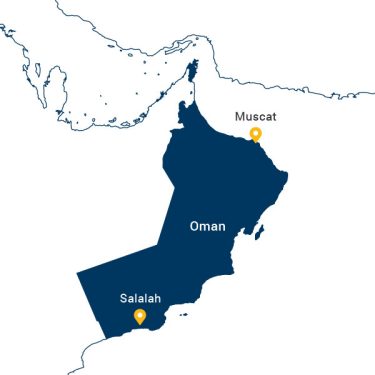
During this multi year, multi phase project INGENAV supported Oman´s Civil Aviation Authority with the following Tasks::
- Development of Concept of Operations for Muscat ACC, Muscat and Salalah Towers
- Updates to the Operations manuals for Muscat ACC, Muscat and Salalah Approach and Tower Units
- Participation in the Safety Assessments for transition related activities
- Development delivery of training in transition towards new system functionalities including:
- New Taxiing Procedures
- Parallel Runway Operations in Muscat
- New Airspace and areas of responsibility
- New ATC Unit configuration
- Development and delivery of Training in transition towards new system functionalities including:
- Electronic flight strips
- Arrival Manager (AMAN)
- Departure Manager (DMAN)
- Medium Term Conflict Detection (MTCD).
- Silent cross sector coordination.
- OLDI
- Transition management plan for each operation including:
- Human Resources Plan
- Migration phasing
- Rehearsals
- Rollback procedures

CHarlie
CHarlie´s objective was to explore how, with the use of ATCO generated data and modern heuristic and ML powered techniques support to ATCO decision making could enable efficiency gains at ANSP level.
In CHarlie the following four functions were explored:
- CORA – Conflict Resolution Advisory, where automation assists ATCOs by proposing human centric resolution advisories to detected conflicts.
- FEED – Highlighting early identification of future complexity areas at ATC sector level and proposing early and flow efficient solution to reduce these complexities.
- R4 – Ready for. Meant to provide safe and efficient support to ATCOs in nominal conditions.
- ADA – Anomaly detector, that supports ATCOs in the detection of anomalies related to flows and individual trajectories and this improving predictability and safety.
Here is a CHarlie presentation in pdf format

OJTI and CA training projects
Our On the Job Training Instructor and Competence Assessor courses are available for both ATC and non-ATC personnel with the ATC versions being delivered under EASA Certification and with EU340/2015 compliance.
The OJTI course covers the necessary skills and techniques for becoming an ATC on the job instructor, while the CA course covers techniques for assessing competence during training and operations.
To find out more, please click here to visit our training page